
How the democratization of AI is reshaping innovation, quality, and leadership inside modern enterprises
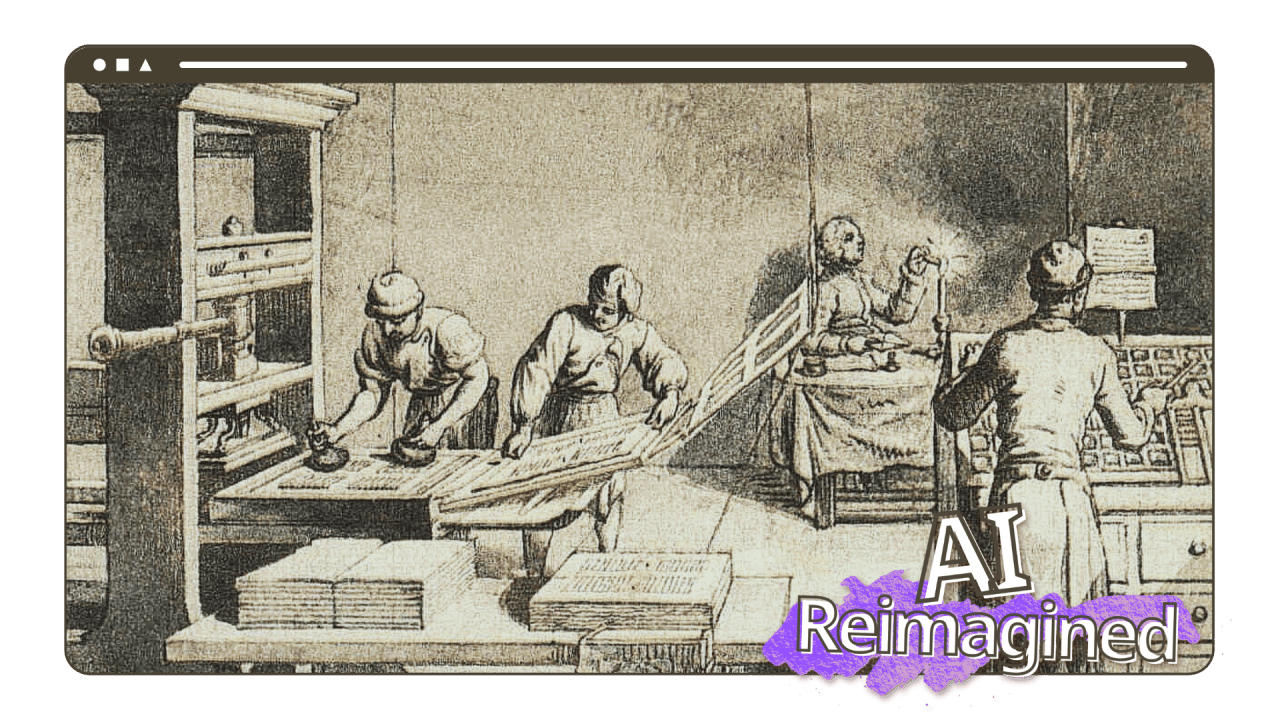
When Gutenberg built the printing press, he did more than speed up bookmaking. He unlocked creation itself, making it harder to control. The press broke the monopoly on knowledge and unleashed a wave of experimentation, some profound, some chaotic.
Centuries later, another revolution unfolded through self-publishing. Authors no longer needed the blessing of a publisher to share their voice. The gates opened wide. For a while, the flood was messy: the internet filled with half-finished manuscripts, derivative stories, and hasty first drafts. Quality dipped, and gatekeepers predicted cultural collapse.
Yet a pattern emerged. The best creators—those with vision, persistence, and curiosity—found their readers. They invented new genres, rewrote old ones, and built sustainable careers on authenticity and connection. In publishing more, they also wrote better. Democratization did flood the market and dilute quality, but it also forced the best creators to rise, innovate, and lift standards across the board.
Now, a similar disruption is happening inside organizations, as AI transforms how teams build products, services, and solutions. This is reshaping the economics of innovation and redefining how organizations adapt and collaborate.
Where once innovation was gated by expertise, budget, or structure, today anyone with curiosity and a prompt can build. A product manager can prototype a feature using tools like Lovable or Bolt in a couple of hours. An HR specialist can design an onboarding assistant with Copilot. A marketing analyst using Gemini or ChatGPT can generate campaign ideas and data insights without touching a line of code. And with new open-source models like DeepSeek proving that smaller, efficient systems can now rival large proprietary ones—and even run locally on mobile devices—the power to create no longer sits behind corporate APIs. It’s everywhere.
This is an extraordinary shift. But it comes with consequences.
Because when everyone can publish—or in this case, build—volume grows faster than quality can keep up. In enterprises, we’re already seeing the rise of technical debt, duplicated automations, brittle workflows, and disconnected solutions, all adding layers of future maintenance. In the rush to move fast, many teams are unknowingly building systems that will require months of refactoring and realignment later.
In other words, we’re back in the early days of self-publishing, brimming with creativity, but flooded with noise.
Leadership today isn’t about control, it’s about knowing what quality looks like.
Curation matters, but judgment matters more. Leaders must set clear quality standards, model good practice, and help teams distinguish between inspired prototypes and unscalable ideas. The organizations that will thrive in this new publishing age aren’t those that tighten control; they’re the ones that invest in discernment, mentorship, and shared definitions of excellence; they’re the ones empowering employees to experiment with quality, accuracy, and purpose as guiding principles.
Because innovation isn’t just about speed. It’s about discipline and direction.
The smartest enterprises are already creating the equivalent of in-house publishing houses for AI. Spaces where teams can prototype freely but are guided by experienced editors and well-understood standards of quality. They’re building review processes, knowledge-sharing rituals, and responsibility-by-design frameworks that push good governance principles directly to teams, helping experimentation grow into scalable innovation while de-risking outcomes.
The open-source movement shows us what happens when creativity scales. Solutions get better, faster. The community learns in public. Quality rises through iteration. But only because people invest in feedback, shared learning, and high standards. The same must happen inside our companies.
AI is democratizing creation at a breathtaking pace. The challenge now is not access, it’s mastery.
And mastery isn’t only about technical skill; it’s also ethical. As AI creation becomes universal, enterprises must decide what kind of builders they want to be: careless publishers of noise or responsible editors of truth. Fairness, attribution, and transparency aren’t just governance checkboxes; they’re the foundations of trust in an age where anyone can build.
Enterprises have a choice: drown in a flood of unedited drafts, or build the structures that turn abundance into excellence.
The printing press made reading universal. Self-publishing made writing universal. Now AI is making building universal. The next renaissance won’t come from how many things we can make, it will come from how well we learn to refine them.
This is our editorial moment. Let’s publish wisely.
#AI #Innovation #FrugalInnovation #AInative #DigitalTransformation #Leadership #AITransformation #HumanCenteredAI #Experimentation #Uncertainty #AIethics #FutureOfWork #ResponsibleAI


